
Choosing a study abroad program is one of the most exciting decisions a student can make, but it can also feel overwhelming. There are countries to compare, cities to research, costs to calculate, courses to approve, housing options to understand, and safety questions to ask.
The right program is not always the most famous one, the cheapest one, or the one with the best-looking photos. The best study abroad program is the one that fits your academic goals, budget, comfort level, travel style, and long-term plans.
At StudyAbroad101, we believe student reviews are one of the most useful tools in the decision-making process. A brochure can tell you what a program hopes to offer. A student review can tell you what the experience actually felt like.
Before you apply, use this checklist to compare your options more carefully. You can also compare study abroad programs and read student reviews on StudyAbroad101.

1. Start With Your Academic Goals
Before choosing a destination, start with the academic reason you want to study abroad.
Ask yourself:
- Do I need courses that count toward my major?
- Do I need general education credits?
- Do I want language immersion?
- Am I looking for an internship abroad?
- Would a summer, semester, or faculty-led program work best for me?
A city may sound exciting, but if the courses do not transfer or support your degree plan, the program may not be the best fit. Before applying, speak with your academic advisor or study abroad office to confirm how credits will transfer back to your home university.
You should also compare the academic style of each program. Some programs may feel similar to your home university. Others may involve more independent learning, fieldwork, research, or experiential education.
Student reviews can be especially helpful here because they often explain how demanding the courses felt, how professors taught, and whether students felt academically supported.
2. Compare the Total Cost, Not Just the Program Fee
Cost is one of the biggest factors in choosing a study abroad program, but students often make the mistake of only comparing the listed program fee.
The real cost of studying abroad may include:
- tuition or program fees
- housing
- meals
- flights
- passport and visa costs
- health insurance
- local transportation
- books and supplies
- weekend travel
- phone plans
- personal spending
- emergency expenses
A program that looks cheaper at first may become more expensive once housing, meals, and transportation are added. A more expensive program may include more services, excursions, meals, or support.
When comparing programs, create a simple budget estimate for each option. Try to separate required costs from optional spending. This gives you a clearer picture of what you will actually need.
Parents and students should also check whether financial aid, scholarships, or institutional funding can apply to the program.
3. Read Student Reviews Before You Apply
One of the best ways to understand a study abroad program is to read reviews from students who have already participated.
Reviews can help you understand:
- whether students felt supported
- how housing worked
- whether courses were useful
- how safe students felt
- what daily life was like
- whether the program was organized
- what students wish they had known before going
- whether they would recommend the program to others
When reading reviews, do not only look at the overall rating. Read the details. A five-star program may still have housing or communication issues. A lower-rated program may have improved recently or may be better suited to a specific type of student.
Look for patterns. If several students mention strong support staff, that is a good sign. If many reviews mention unclear communication, hidden costs, or housing problems, take that seriously.
Study abroad is a personal experience, so no review will match your situation perfectly. But reviews can help you ask better questions before committing.
4. Think Carefully About Location
Destination matters, but not always in the way students expect.
Some students want a large international city with museums, nightlife, public transportation, and many travel options. Others may prefer a smaller city where it is easier to build local connections and avoid feeling overwhelmed.
Before choosing a location, think about your personality and goals. Ask yourself:
- Do I want a major city or a smaller community?
- Do I want to study in English or practice another language?
- Do I want a destination with easy weekend travel?
- Do I prefer a familiar culture or a more challenging cultural experience?
- Do I want a popular study abroad destination or somewhere less common?
There is no single right answer. A student who loves London may not enjoy a small rural town. A student looking for language immersion may not want to spend all their time with other international students.
If you are comparing popular destinations, start with country and city pages such as Spain, Italy, the United Kingdom, London, Rome, and Barcelona.
5. Check Housing Options
Housing can shape your entire study abroad experience. Before choosing a program, look closely at what type of housing is offered.
Common housing options include:
- residence halls
- shared apartments
- homestays
- student housing
- university dormitories
- independent housing
Each option has advantages and disadvantages. A homestay may offer deeper cultural immersion and language practice, but it may also require more adjustment. A shared apartment may offer independence, but students may need to handle more daily responsibilities.
When reading reviews, pay attention to comments about cleanliness, location, commute times, safety, roommates, internet access, and communication with housing staff.
Housing is not just where you sleep. It affects your routine, friendships, budget, safety, and overall comfort abroad.

6. Look at Safety and On-Site Support
Safety is important for students, parents, universities, and program providers. No destination is risk-free, but a strong program should have clear support systems.
Before applying, check whether the program explains:
- emergency contact procedures
- local health care access
- insurance requirements
- mental health support
- arrival support
- orientation
- staff availability
- crisis response plans
- local safety guidance
Students should also research the destination itself, including transportation, local laws, common scams, health considerations, and cultural expectations.
For external preparation, students and families can review U.S. Department of State study abroad safety guidance and CDC Travelers’ Health study abroad guidance. These resources can help with travel advisories, local laws, health preparation, and destination-specific health recommendations.
Parents may want to ask how the program communicates during emergencies and what support exists if a student becomes sick, loses documents, or needs urgent help.
Student reviews can reveal whether support was actually available when students needed it.
7. Choose the Right Program Type
Not all study abroad programs work the same way. Understanding the program type can help you choose the right experience.
Semester Programs
Semester programs are a strong option for students who want a deeper academic and cultural experience. They usually allow more time to adjust, build friendships, travel, and understand the local environment.
Summer Programs
Summer study abroad programs can work well for students with busy academic schedules, athletes, students with jobs, or those who cannot spend a full semester away.
Faculty-Led Programs
Faculty-led programs are often shorter and may include a group of students from the same university. These can be a good fit for students who want more structure and guidance.
Internship Abroad Programs
Internship abroad programs can help students gain professional experience while learning about another country’s workplace culture. Students should carefully check the internship structure, supervision, expectations, and academic credit options.
Direct Enrollment and Exchange Programs
Direct enrollment or exchange programs may offer a more independent experience at a host university. These can be excellent for confident students, but they may require more flexibility and preparation.
The best program type depends on your academic needs, independence level, budget, and comfort with uncertainty.
8. Compare Support Before, During, and After the Program
A good study abroad experience does not begin when your plane lands. It starts with preparation.
Before choosing a program, check what kind of support is provided before departure, during the program, and after students return.
Look for support with:
- applications
- course selection
- credit transfer
- visas
- housing
- airport arrival
- orientation
- cultural adjustment
- health and safety
- internships
- re-entry after returning home
Some programs provide extensive support. Others expect students to be more independent. Neither is automatically better, but you should know what kind of experience you are choosing.
If you are studying abroad for the first time, strong pre-departure and on-site support may be especially important.
9. Ask What Daily Life Will Actually Be Like
Students often focus on the big things: destination, courses, and cost. But daily life matters just as much.
Try to imagine a normal weekday abroad. Ask:
- How will I get to class?
- Where will I buy groceries?
- How far is the housing from campus?
- Will I need public transportation?
- How much will meals cost?
- Will I be surrounded by local students, international students, or both?
- How easy will it be to make friends?
- Will I have free time to explore?
- What will weekends look like?
A program may be academically strong but socially quiet. Another may be exciting but expensive. Another may offer excellent cultural immersion but require more independence.
Student reviews are useful because they often describe these everyday details better than official program pages.
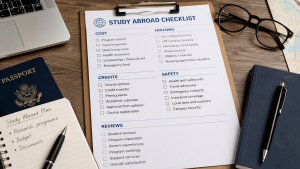
10. Use a Simple Study Abroad Comparison Checklist
Before making your final decision, compare your top programs side by side.
| Category | Program 1 | Program 2 | Program 3 |
| Country | |||
| City | |||
| Term | |||
| Program type | |||
| Courses available | |||
| Credit transfer approved? | |||
| Estimated total cost | |||
| Housing type | |||
| Meals included? | |||
| Safety support | |||
| Internship option | |||
| Student review rating | |||
| Common review comments | |||
| Best fit for |
This makes the decision more practical and less emotional. A beautiful destination may still be the wrong fit if the academics, housing, or cost do not work for you.
11. Questions to Ask Before You Commit
Before applying or paying a deposit, ask these final questions:
- Will this program help me graduate on time?
- Can I afford the full estimated cost?
- Do I understand what is included and not included?
- Have I read student reviews?
- Do I know where I will live?
- Do I understand the safety and emergency support?
- Have I discussed credit transfer with my university?
- Does the destination fit my personality?
- Do I feel comfortable with the level of independence required?
- Would I still choose this program if I could not travel every weekend?
That last question is important. Study abroad is not only about travel. It is about learning, adapting, building confidence, and experiencing student life in another country.
12. How StudyAbroad101 Can Help
StudyAbroad101 helps students compare study abroad programs through real student reviews. Students can explore programs by country, city, subject, provider, university, and program type. Start with the StudyAbroad101 program directory or browse destination pages to compare options.
Instead of relying only on brochures or promotional materials, students can learn from people who have already participated. Reviews can help you understand the academic experience, housing, support, cultural adjustment, and overall value of a program.
Whether you are considering a semester abroad, summer program, faculty-led experience, internship abroad, exchange program, or direct enrollment option, reading student reviews can help you make a more informed decision.
FAQ: Choosing a Study Abroad Program
What should I look for in a study abroad program?
Look for academic fit, credit transfer, total cost, housing, safety support, student reviews, location, program type, and on-site assistance.
Are student reviews important when choosing a program?
Yes. Student reviews can reveal practical details about housing, academics, support, daily life, and overall value that may not appear in official brochures.
Is a semester or summer study abroad program better?
It depends on your schedule, budget, and goals. Semester programs offer deeper immersion, while summer programs can be easier to fit into a busy academic plan.
How can parents evaluate study abroad safety?
Parents should review emergency support, health insurance, local healthcare access, arrival support, communication procedures, and official travel and health guidance.
How do I compare study abroad costs?
Compare total estimated cost, not only the program fee. Include housing, meals, flights, visas, insurance, local transportation, personal spending, and emergency funds.
Final Thoughts
Choosing a study abroad program is not just about picking a place on the map. It is about finding the right academic, financial, cultural, and personal fit.
Take your time. Compare your options. Ask questions. Look beyond the photos. Read what past students say. Think about what kind of experience will help you grow while still supporting your academic goals.
The best study abroad program is not the same for every student. The best program is the one that fits you.
Ready to compare your options? Explore programs and read student reviews on StudyAbroad101.